
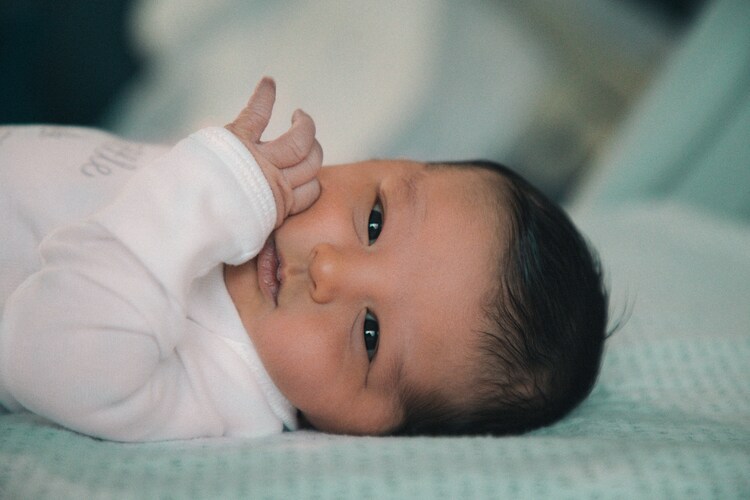
Baby not sleeping?
Let’s explore four reasons why this might be the case:
Reason One: Developmental Immaturity
The first reason that your baby is not sleeping as well as you think they should is because developmentally, they are just not capable of it. Their brain is immature, they do not sleep the same way as adults do, and it looks different when we measure it. Several factors contribute to this:
- Circadian Rhythm: Very young babies do not have a circadian rhythm. Their sleep is distributed throughout the day and night. It takes a long time for a baby’s brain to mature enough to resemble an adult’s during sleep. Even at the age of 2-3, it still looks vastly different.
- Deep Sleep: Babies spend less time in deep sleep, which is beneficial as it reduces the risk of SIDS. They are able to rouse and regulate easily.
- Sleep Cycles: Babies have shorter sleep cycles. As they mature, their sleep cycles get longer, but it is not until a child is closer to 4 years old that their sleep cycles will equal in length to those of an adult.
- REM Sleep: Babies spend more time in REM sleep, from which they are more easily woken.
- Night Feeding: Babies are designed to feed throughout the night. Breastmilk is high in sugar and low in fat, leading to frequent feeding. Even formula-fed babies still need to feed at night to fuel and support brain development, which impacts their sleep.
- Environmental Needs: Babies cannot meet their own needs, such as getting comfortable or adjusting to loud noises, leading to interrupted sleep and the need to signal for support.
Reason Two: Individual Needs and Sensory Systems
Your baby is unique, and understanding what they need to sleep well is part of the learning curve of being a parent. Their sensory system and temperature preferences are unique to your baby.
- Sensory Experiences: Determine what kind of sensory experiences your baby needs to have a regulated nervous system from which sleep will follow. Do they need to be settled in a quiet, dark room, or do they sleep better in a pram or carrier?
- Temperament: Understanding your baby’s temperament, which is part of their genetic imprint, helps in finding ways to support their sleep. Are they persistent, laid back, or regular in their habits?
Reason Three: Underlying Health Issues
Underlying health issues can significantly impact your baby’s sleep. You can try every attachment-based strategy, but if there are underlying health issues, sleep will be affected. Health issues that can interrupt sleep include:
- Teething and illness
- Constipation
- Obstructed sleep apnea
- Restless legs and other mineral-related sleep disorders
- Parasomnias
- Oral dysfunction
- Reflux
- Allergies
Identifying and treating these health issues is crucial for improving sleep.
Reason Four: Unrealistic Expectations
Parents often have unrealistic expectations about their baby’s sleep patterns. Even when considering brain development, sensory systems, temperament, and health issues, many parents still believe their baby should sleep through the night by a certain age, such as 6 months.
Sleep Myths: Stories like “babies should be put down drowsy but awake” or “they should never nurse to sleep” can be misleading.
Realistic Statistics: Research shows only 16% of babies at 6 months of age sleep through the night. Sleep is not linear; there is a peak of night waking around 9 months, which gradually tapers off towards a year.
Bedsharing: Bedsharing is biologically normal and evolutionary expected, yet it is often discouraged without guidance on how to make it safe.
Understanding that sleep development is a gradual process and aligning expectations with the reality of infant sleep can make a significant difference.
About the Author
Emma Gawne is a certified Holistic Sleep Coach who supports families across the UK with responsive, relationship-based sleep strategies. She combines evidence-informed practice with deep empathy for the emotional and developmental needs of babies, toddlers, older children and their parents.
Learn more about Emma →
If you’re looking for gentle sleep support for your infant or child, take a look at my packages and services.



0 Comments